
Introduction — Why Solar Matters Now
Solar energy — the sunlight captured and converted into heat or electricity — is central to the global clean energy transition. It is abundant, widely distributed, and increasingly cost-competitive with fossil fuels. For India, with high solar irradiance across most regions, solar energy offers both energy security and a path to lower greenhouse gas emissions while supporting job creation and local industry development.
1. What is Solar Energy and How It Works?
There are two primary commercial ways to capture solar energy:
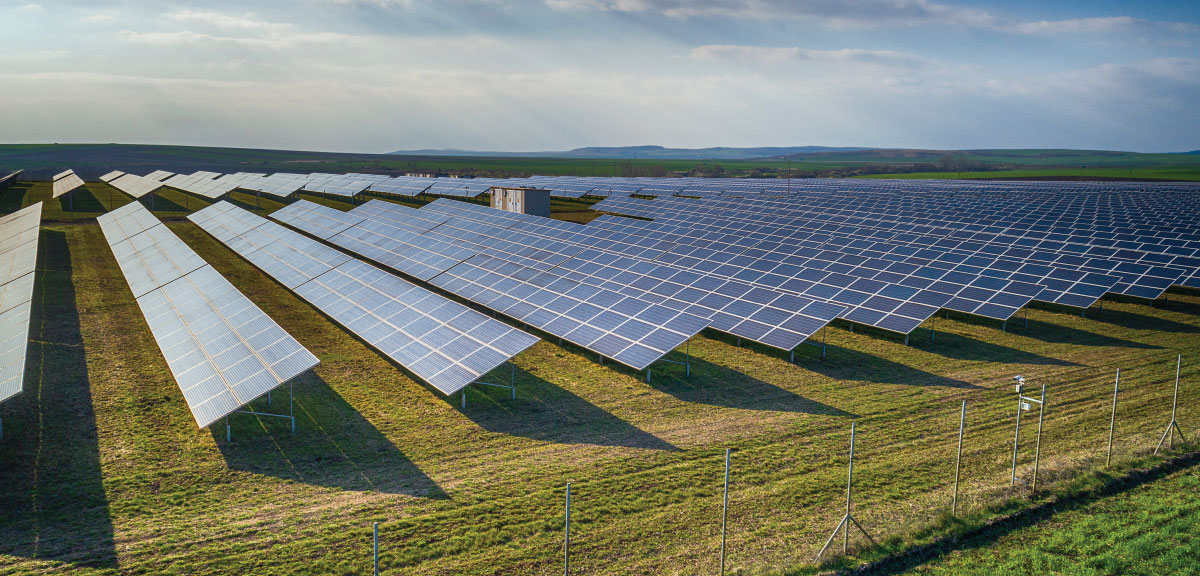
- Photovoltaic (PV) systems: Semiconductor cells (commonly silicon) convert sunlight directly into electrical current via the photovoltaic effect. Multiple cells form a module and modules create arrays sized for homes, businesses, or utility plants.
- Solar thermal (concentrating) systems: Mirrors or lenses concentrate sunlight to produce heat, which generates steam and drives turbines for large-scale electricity production — often used in concentrated solar power (CSP) plants.
PV systems generate DC electricity which is then inverted to AC for household or grid use; smart inverters and energy management systems help integrate variable solar output into the grid smoothly.
2. Types of Solar Panels
- Monocrystalline: Highest efficiency, longer life, sleek look — higher cost.
- Polycrystalline: Lower cost, slightly reduced efficiency.
- Thin-film: Flexible and lightweight, lower efficiency — useful for special applications.
- BIPV (Building-Integrated PV): Panels integrated into roofs, facades, or glazing for dual-purpose architecture and generation.
Related Articles

3. India’s Solar Potential, Targets & Progress
India receives massive solar radiation annually — the country’s solar potential is measured in trillions of kWh and most regions receive between 4–7 kWh/m²/day. The government set an objective of installing roughly 280 GW of solar capacity by 2030 under expanded planning frameworks.
Progress has been rapid: official MNRE reporting shows total cumulative solar installations rising significantly year-on-year. Recent MNRE physical progress updates indicate total installed solar capacity running into the tens of gigawatts range (official dashboards show cumulative installed RE and solar figures). These published progress dashboards and year-wise achievement pages provide the numbers used by policymakers for planning and incentives.
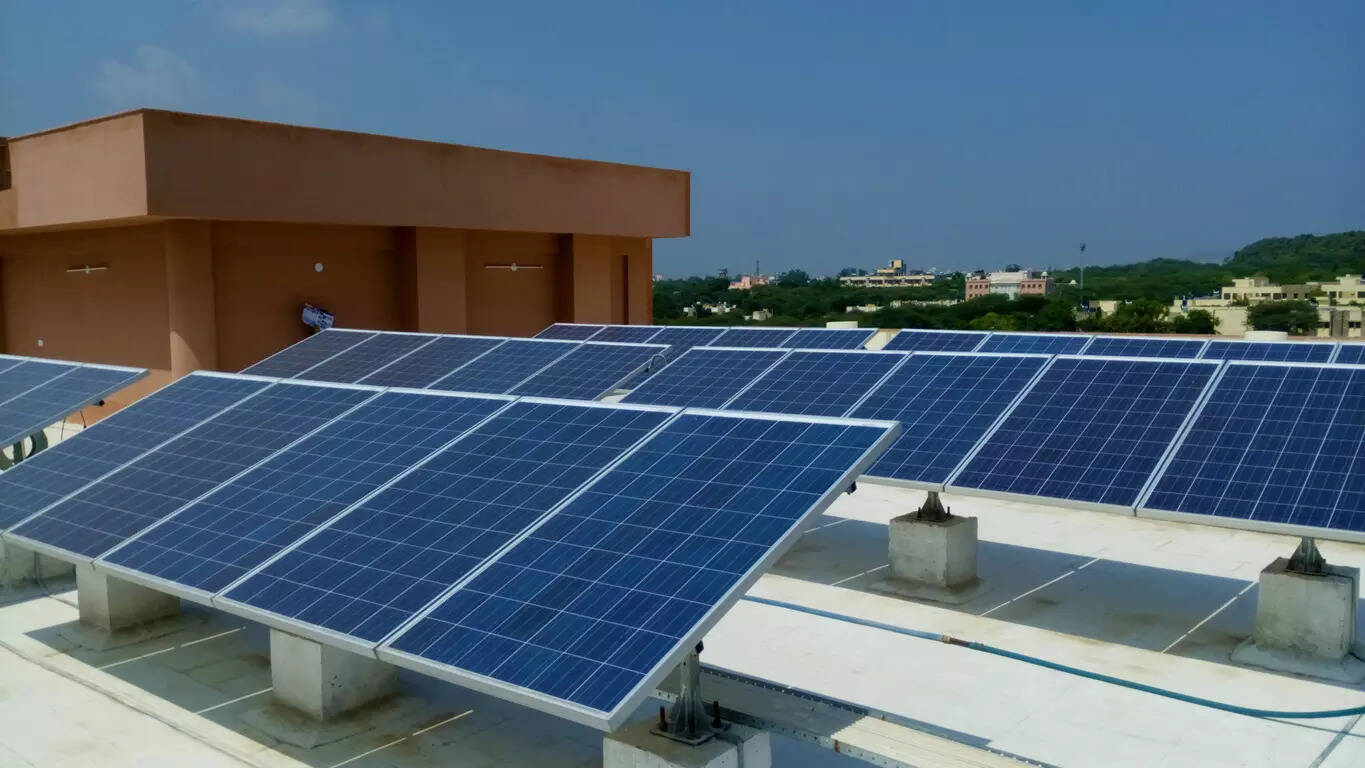
Quick snapshot: rooftop adoption is growing (tens of GW of rooftop capacity reported by early 2025), large-scale solar parks continue to expand, and policy measures such as subsidies, net-metering and production-linked incentives (PLI) aim to drive manufacturing and installation.
4. Policies, Subsidies & Manufacturing Push
India’s MNRE and state governments deploy multiple programs to accelerate uptake: rooftop subsidies, the PM-KUSUM scheme (solar pumps for agriculture), Solar Park development, and PLI schemes to boost local PV manufacturing. These interventions are designed to reduce dependence on imports, strengthen the domestic value chain, and lower overall system costs.
Why manufacturing matters
A stronger domestic manufacturing base lowers supply chain risk, reduces module prices, improves local job creation, and supports long-term energy sovereignty. PLI incentives and local content requirements are central to this strategy.
5. Advantages, Use-Cases & Economic Impact
Advantages: Solar power reduces fuel imports, lowers power bills for consumers, reduces greenhouse gases, and creates jobs across installation, operations, and manufacturing. Rooftop solar particularly improves energy resilience for households and businesses.
Applications: residential rooftops, commercial/industrial rooftops and ground-mount plants, solar pumps in agriculture, microgrids for remote villages, and floating solar on reservoirs (which saves land and reduces water evaporation).
Economic impact: The growth of the solar value chain supports manufacturing jobs, EPC (engineering, procurement, construction) jobs, and O&M roles. Large projects also stimulate local services and infrastructure development.
6. Challenges and Practical Solutions
- Variability: Solar produces during daylight; storage or hybridization (solar + wind + hydro) help smooth supply.
- Storage cost: Battery prices are falling but remain a significant share of total system cost — ongoing R&D and scale will continue reducing costs.
- Land use: Large parks require space — floating solar and agro-PV are practical land-friendly alternatives.
- Recycling & lifecycle: Panel end-of-life recycling and sustainable supply-chain practices will become more important as installations age.
7. Innovation & The Road Ahead
New technologies — perovskite tandems, advanced thin films, transparent PV for windows, solar paint, and smarter inverters — are maturing. Integration of AI into grids enables better forecasting and battery dispatch, while advances in battery chemistry (sodium-ion, solid-state) will improve storage affordability and safety.
On policy and vision, India’s clean energy ambitions (including Net Zero targets) and global partnerships such as the International Solar Alliance strengthen cooperation in R&D, financing, and large-scale deployment. Continued policy certainty, manufacturing scale-up, and grid modernization will be crucial to achieve national targets and global climate goals.
Conclusion
Solar energy is not just a technology — it’s an economic and environmental opportunity. With robust policy support, rising domestic manufacturing, and rapid technological advances, solar power can deliver energy access, jobs, and emissions reductions at scale. For India and the world, the road ahead is bright — provided planning, storage, recycling, and grid integration keep pace with deployment.


